>>

An easy one-skillet Thai chicken curry ready in 20 minutes — layered with bright lime, creamy coconut, warming spices, and tender spinach. Healthy, family-friendly, and perfect for busy weeknights.
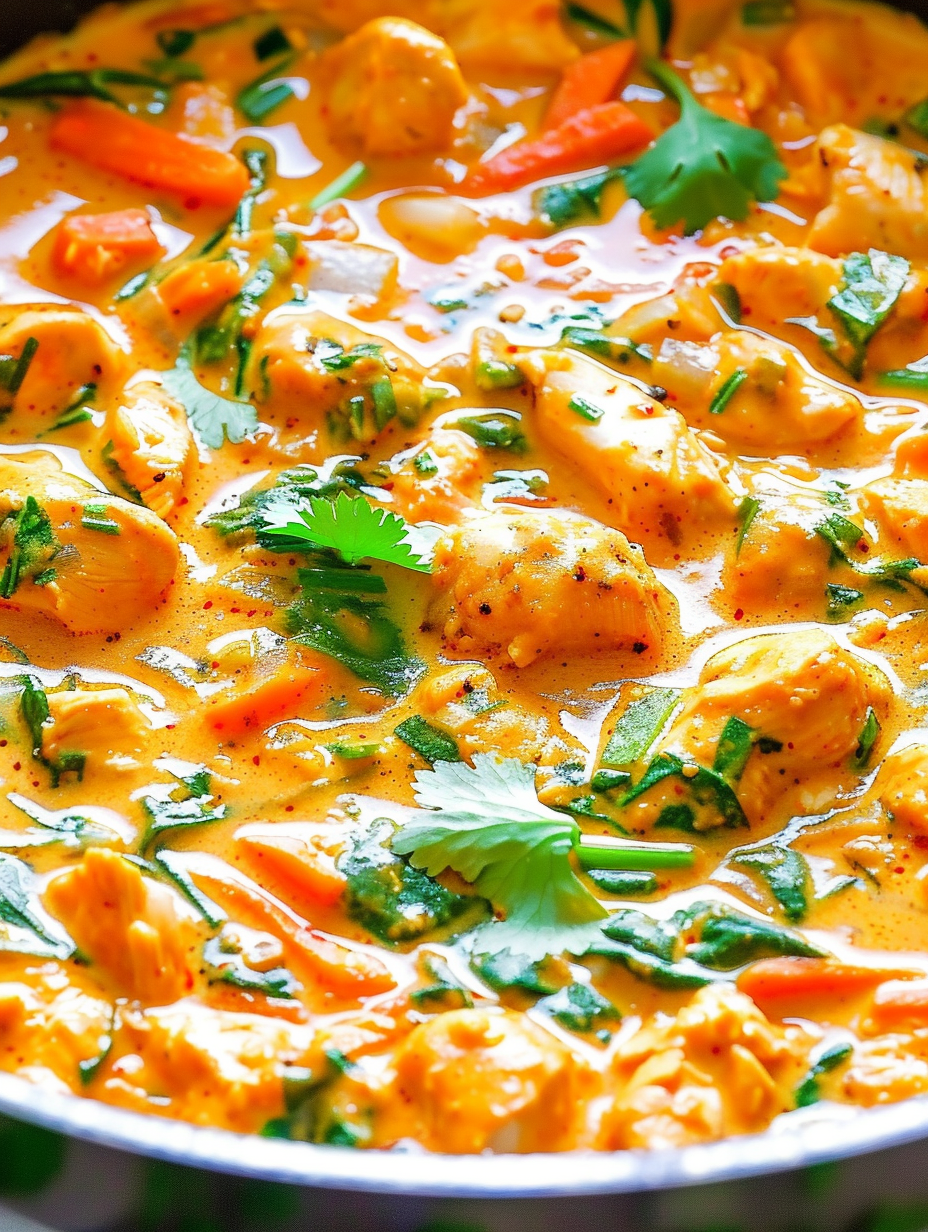
This Thai chicken coconut curry has been my go-to weeknight answer for years when I want something that tastes indulgent but comes together in under 30 minutes. I first made this during a busy week when pantry staples and a single skillet were all I had energy for. The result surprised me: bright lime, warm coriander and ginger, and creamy coconut milk wrapped around bite-sized pieces of chicken and tender spinach. It feels like comfort food without weighing you down.
I discovered the balance that makes this dish so special when I started swapping full-fat coconut milk for the lighter version and adjusting the curry paste by taste. On chilly evenings it warms the whole kitchen, and on rushed nights it still feels special enough to serve to friends. The texture is wonderfully layered — silky broth, al dente shredded carrots, and plump leaves of wilted spinach — and the flavor is flexible enough to adapt to what you have on hand.
I remember the first time my family tasted it — my partner asked for seconds before I’d even finished plating. Over the years I’ve learned small things that elevate the dish: always taste and adjust the curry paste amount, finish with fresh lime juice for brightness, and never skip the cilantro garnish when you have it. It’s simple, but those little choices make it memorable.
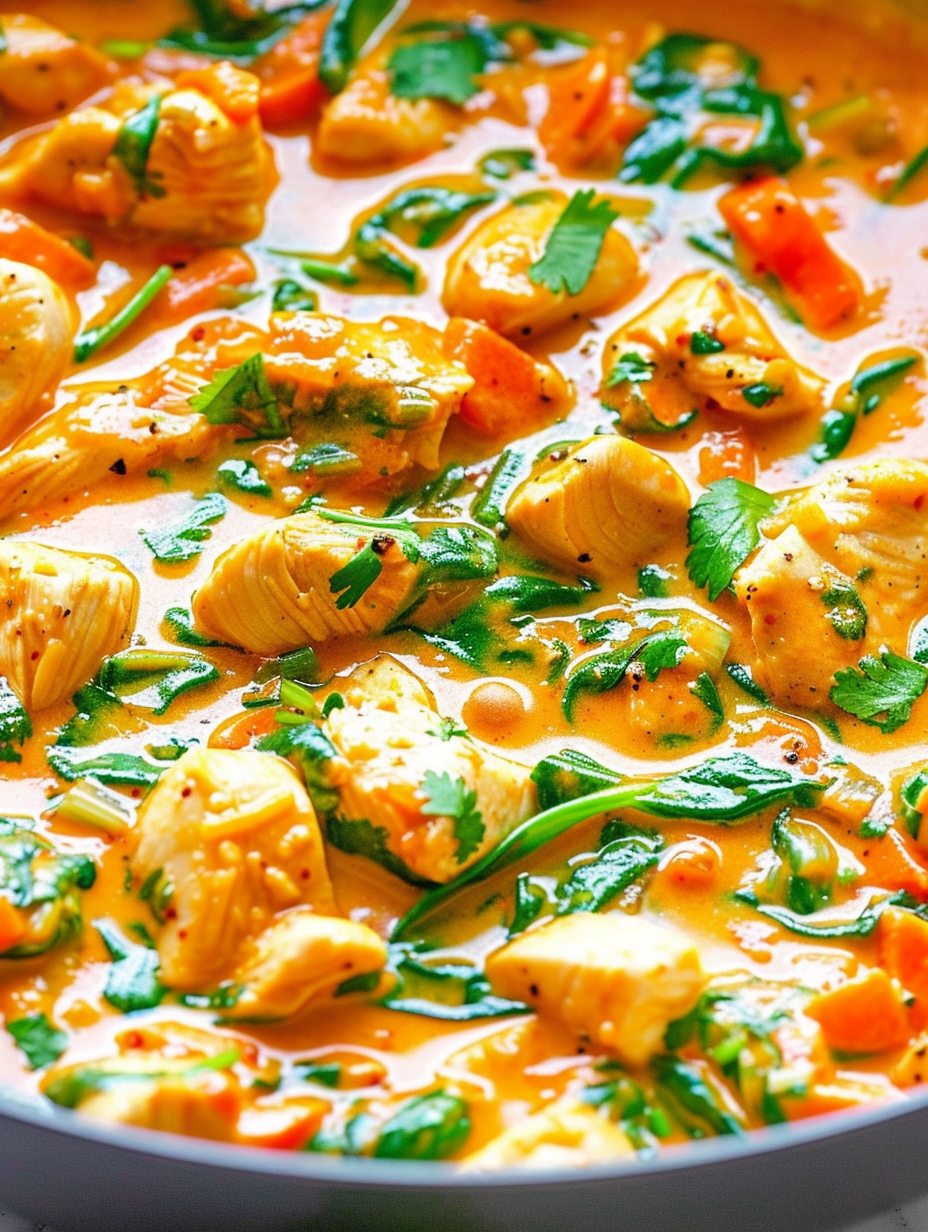
My favorite part about this dish is how forgiving it is: you can tweak the heat, sweetness, and salt at the end and still end up with a dinner everyone loves. Family members have taken turns adding their own small twists — extra lime, a drizzle of toasted sesame oil, or chopped peanuts for crunch. Those small variations make each batch feel new.
Store leftovers in airtight containers in the refrigerator for up to one week; label with the date to keep track. For longer storage, spoon curry into freezer-safe containers leaving a little headspace and freeze for up to three months. When reheating, thaw overnight in the fridge and warm gently on low heat, adding a tablespoon of water if the sauce has tightened. Avoid boiling after reheating, which can cause coconut milk to separate and change texture. For meal-size portions, divide into 1-cup servings before freezing to speed thawing and reduce waste.
If you don’t have Thai red curry paste, substitute 1 to 2 tablespoons of curry powder plus a pinch of cayenne to mimic heat, though the flavor profile will be less complex. Chicken thighs can replace breast for juicier meat — use the same cooking time but check for tenderness. Swap spinach for baby kale or Swiss chard; these need slightly longer to soften. If you need the curry to be nut-free, check that your curry paste doesn’t contain shrimp paste or fish sauce; use a labeled allergen-free paste when necessary.
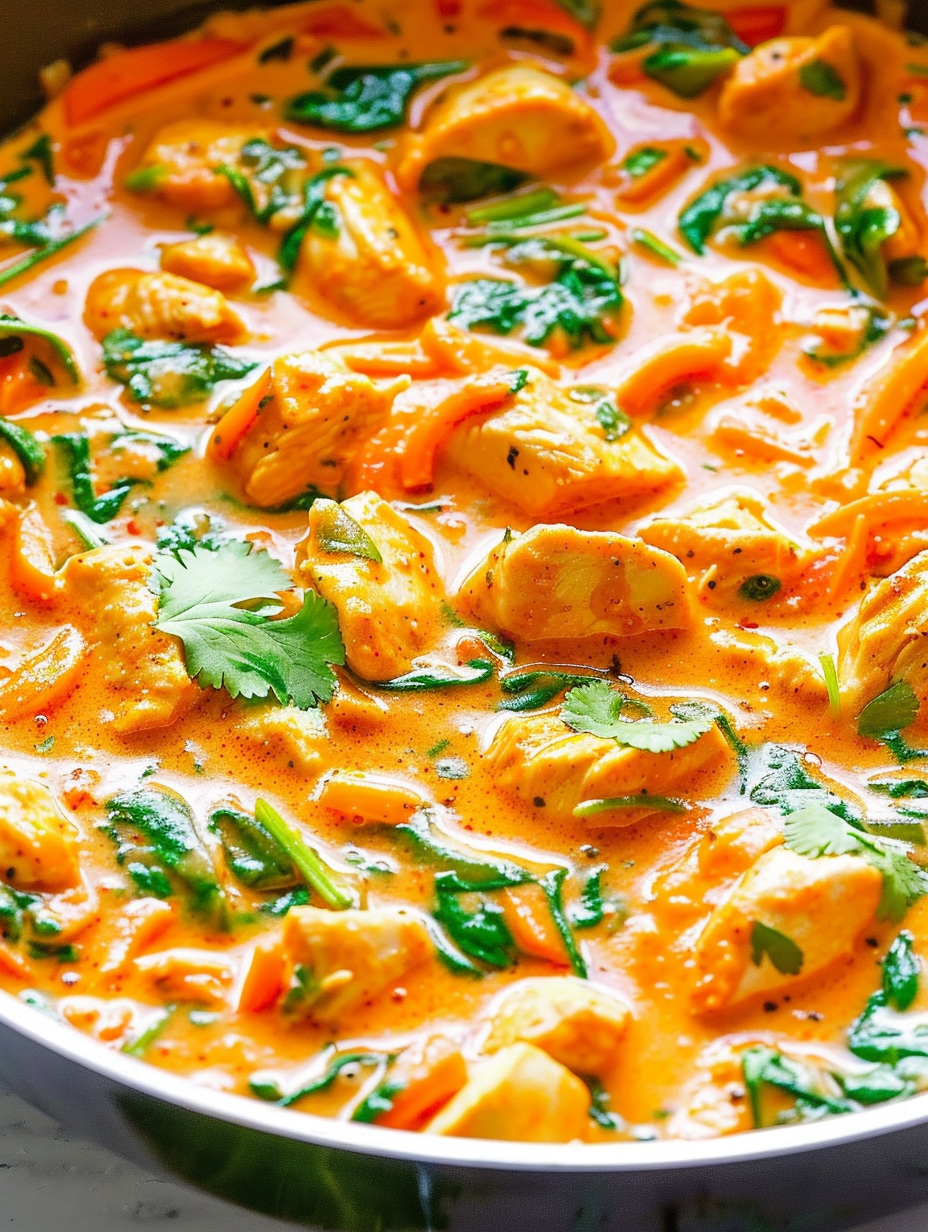
Serve over steamed jasmine rice for an authentic pairing, or choose quinoa for a higher-protein option. For low-carb meals, spoon over cauliflower rice. Garnish with fresh cilantro, lime wedges, and thinly sliced green onions; for extra texture, sprinkle toasted peanuts or cashews (unless serving someone with nut allergies). Offer a side of pickled cucumbers or a simple cucumber salad to cut through the richness and add a refreshing crunch.
Red curry is a classic Thai preparation that balances coconut milk, chilies, and aromatic spices. While regional variations exist throughout Thailand, the essential concept is the marriage of creamy coconut with fragrant curry paste made from dried red chilies, garlic, lemongrass, galangal or ginger, and other aromatics. This version is a simplified, weeknight-friendly interpretation that leans on pantry staples while honoring those flavor principles.
In spring and summer, brighten the curry with halved cherry tomatoes and swap cilantro for Thai basil for a fresher profile. In fall and winter, add root vegetables like sweet potato or butternut squash and simmer a little longer to meld flavors. For holiday gatherings, double the batch and serve family-style with a variety of sides so guests can customize heat and toppings.
To prep ahead, dice onions and shred carrots up to two days in advance and store them in the fridge. Marinate diced chicken briefly with a pinch of salt and a teaspoon of lime juice to enhance tenderness. Assemble the aromatic mixture in a jar or small container so you only need to combine and heat in the skillet. Freeze individual portions for easy lunches—thaw overnight and reheat gently for a quick, nourishing meal.
There’s a warmth to this curry that makes it feel like an instant family favorite. Whether you’re cooking for a crowd or just for yourself, it’s a reliable, flavorful dish that’s easy to love and simple to adapt. Give it a try and make the small tweaks that suit your family’s palate — it’s meant to be enjoyed and personalized.
Start with 1 tablespoon of red curry paste and increase to taste — it’s easier to add heat than to remove it.
Use a thermometer to ensure chicken reaches 165°F for safe, moist results.
If the sauce splits when reheating, whisk in a tablespoon of coconut milk or water over low heat to bring it back together.
Shred carrots finely so they cook in the short simmer time and add sweetness without long cooking.
This nourishing thai chicken coconut curry recipe is sure to be a staple in your kitchen. Enjoy every moist, high protein slice — it is perfect for breakfast or as a wholesome snack any time.
This Thai Chicken Coconut Curry recipe makes perfectly juicy, tender, and flavorful steak every time! Serve with potatoes and a side salad for an unforgettable dinner in under 30 minutes.
Heat 2 to 3 tablespoons coconut oil in a large skillet over medium-high heat. Add the diced onion and sauté for about 5 minutes, stirring occasionally, until softened and translucent but not browned.
Add the diced chicken breast and cook 4 to 6 minutes, stirring frequently, until the pieces are lightly browned and cooked through (165°F internal temperature). Avoid overcrowding the pan.
Stir in minced garlic, fresh or ground ginger, and 2 teaspoons ground coriander. Cook about 1 minute until fragrant, stirring constantly to prevent burning.
Pour in a 13-ounce can of coconut milk, add shredded carrots and 1 to 3 tablespoons red curry paste. Season with 1 teaspoon kosher salt and 1/2 teaspoon black pepper. Reduce heat to medium and simmer 4 to 6 minutes to thicken slightly.
Stir in about 3 cups fresh spinach and 1 tablespoon lime juice. Cook 1 to 2 minutes until the spinach wilts. Taste and adjust with brown sugar, more curry paste, salt, or pepper as needed.
Remove from heat, sprinkle with 1/4 cup chopped cilantro, and serve immediately over rice, quinoa, or with naan. Store leftovers airtight in the fridge for up to one week.
Last Step: Please leave a rating and comment letting us know how you liked this recipe! This helps our business to thrive and continue providing free, high-quality recipes for you.
Leave a comment & rating below or tag
@yummique on social media!
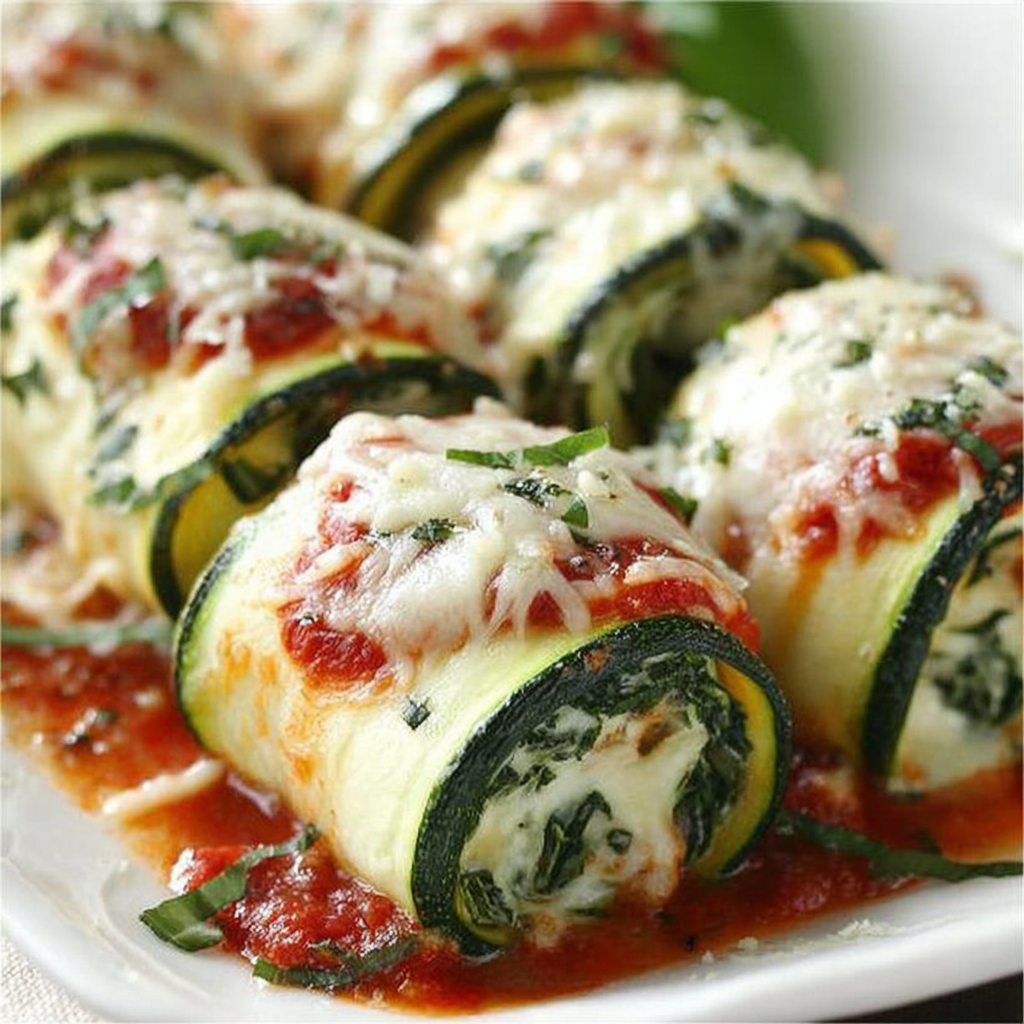
Tender grilled zucchini wraps basil ricotta, bathed in marinara and mozzarella, baking into a bubbly, lighter Italian comfort dinner ready in 30 minutes.
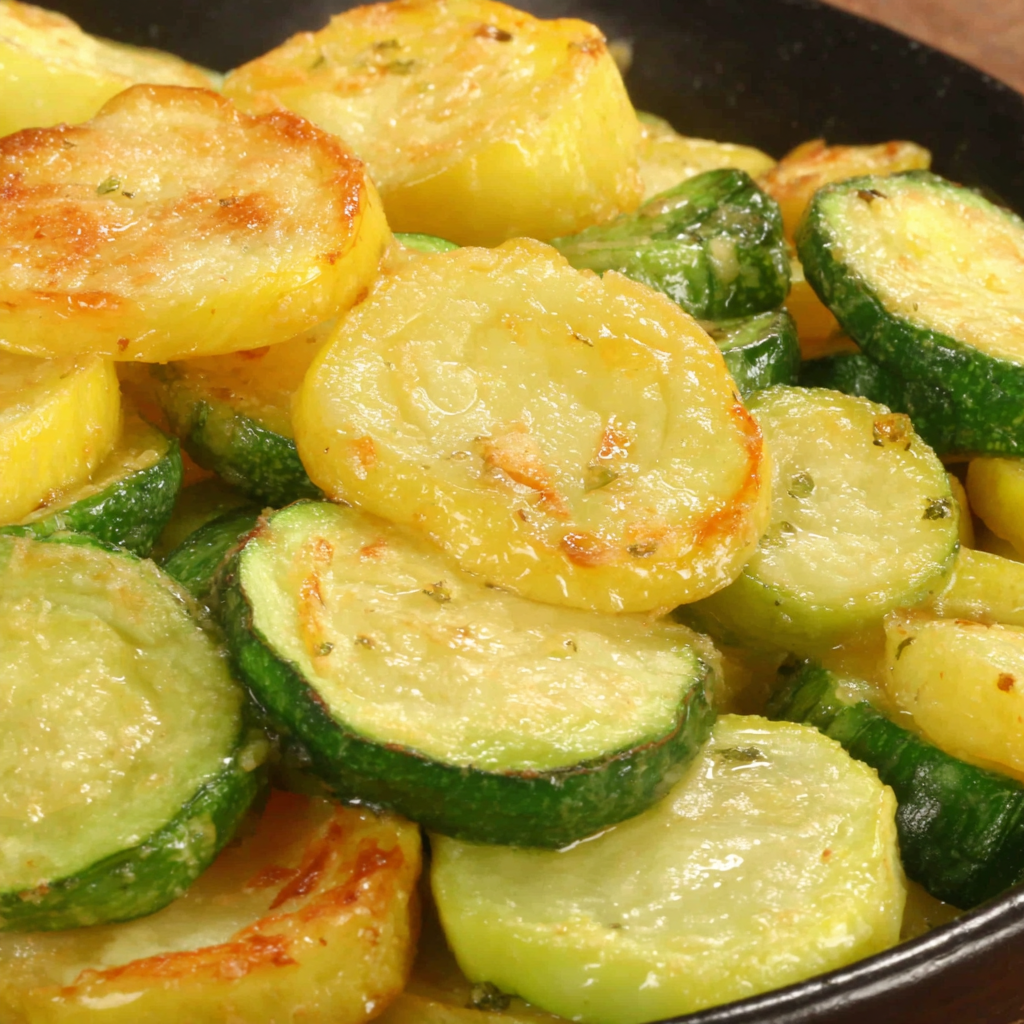
Crisp-edged, tender-in-the-middle zucchini and yellow squash made in 15 minutes with pantry spices. A vibrant, veggie-forward side everyone devours.
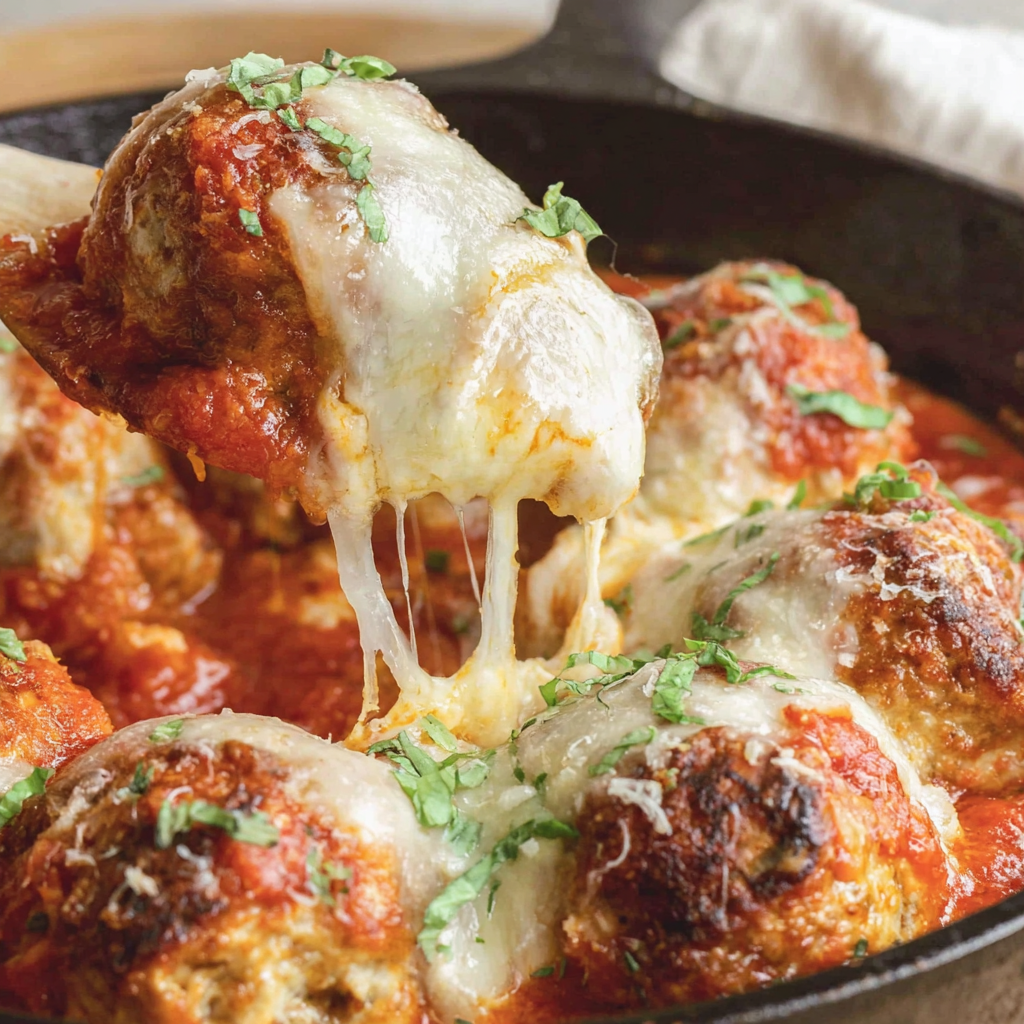
Tender chicken meatballs simmered in rich marinara and blanketed with melty mozzarella, bringing all the flavors of chicken parm in cozy, bite-sized form.
Leave a comment & rating below or tag @yummique on social media!
Enjoyed this recipe? Share it with friends and family, and don't forget to leave a review!
This recipe looks amazing! Can't wait to try it.
Comments are stored locally in your browser. Server comments are displayed alongside your local comments.

Join to receive our email series which contains a round-up of some of our quick and easy family favorite recipes.